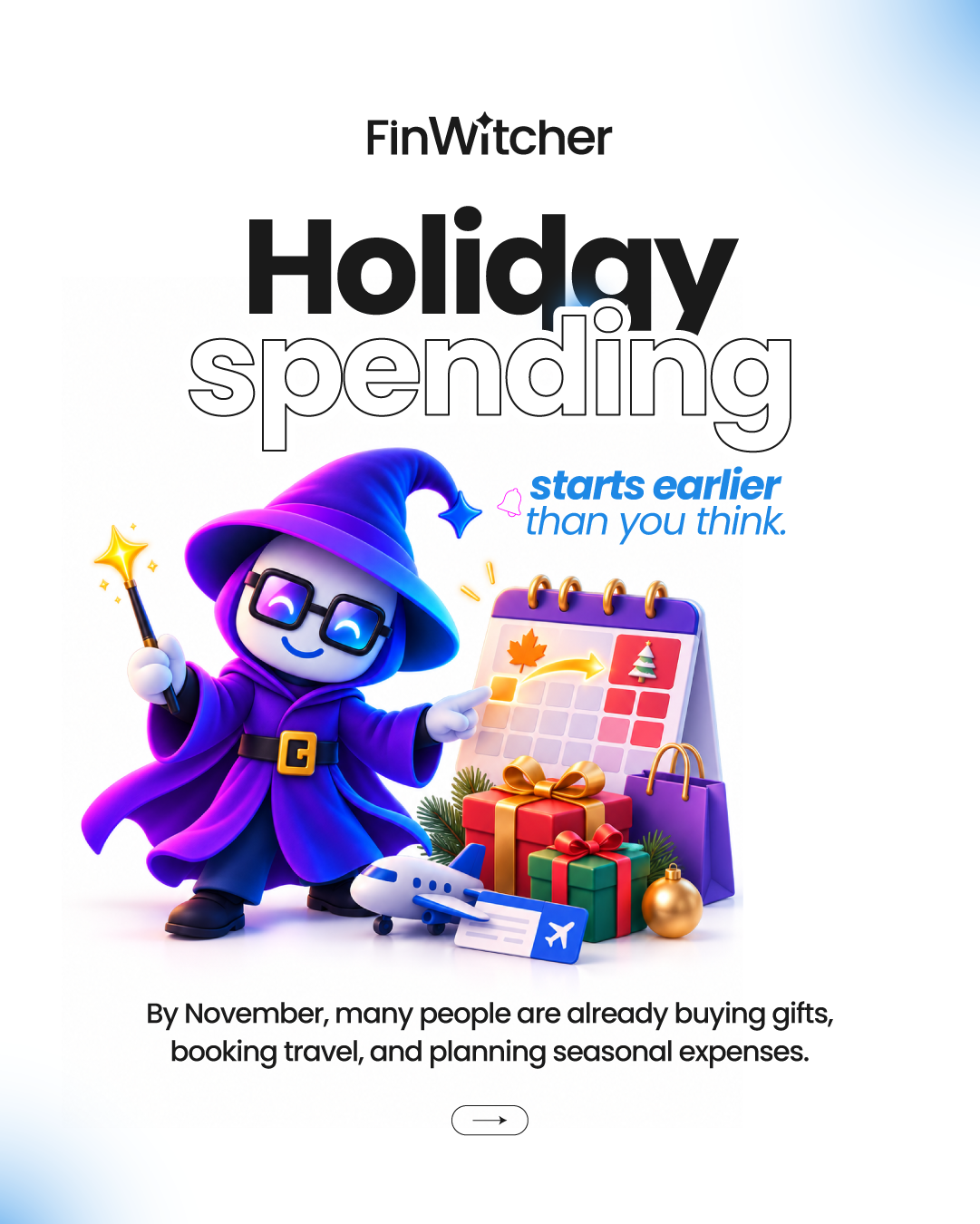
Holiday spending does not begin in December anymore.
For many consumers in the United States, the holiday shopping season begins much earlier—sometimes as early as September or October. According to McKinsey’s 2026 ConsumerWise research, 10% of surveyed U.S. consumers had already started holiday shopping by late July or early August, while 11% planned to start in September and 19% planned to start in October.
That means nearly half of consumers may begin holiday shopping by October.
This creates an important financial planning opportunity.
If holiday spending starts early, holiday budgeting should start even earlier.
AI-powered financial tools can help consumers plan seasonal expenses, avoid impulse purchases, track spending in real time, and reduce the risk of holiday debt.
Holiday expenses often feel manageable one purchase at a time.
A gift here. A dinner there. Travel costs. Decorations. Shipping fees. Black Friday deals. Cyber Monday discounts. Office gifts. Family gatherings. Last-minute purchases.
Individually, these expenses may not seem dangerous.
Together, they can overwhelm a budget.
The biggest risk is not generosity. It is lack of visibility.
Many people overspend during the holidays because they do not have a complete view of how much they have already spent or how many expenses are still ahead.
AI can help solve that problem by turning seasonal spending into a structured plan.
Before making any purchases, define your total holiday spending limit.
This number should be based on your income, existing obligations, savings goals, and upcoming expenses—not emotions or social pressure.
AI-powered financial tools can help analyze your cash flow and suggest a realistic seasonal spending range.
For example, if your regular expenses are already high in November and December, your holiday budget may need to be more conservative. If you have been saving throughout the year, you may have more flexibility.
The goal is to set a limit that protects your financial stability.
A single holiday budget is useful, but categories make it more actionable.
Common holiday categories include:
AI can help divide your total budget into categories based on your past spending patterns and current priorities.
This helps you understand where your money is likely to go before spending begins.
It also makes trade-offs easier. If travel costs increase, you may need to reduce spending in another category.
Holiday spending becomes risky when people lose track of purchases.
This happens easily during sales season. A discounted item may feel like a smart decision, but several “small” purchases can add up quickly.
AI-powered spending trackers can help categorize purchases automatically and compare them against your planned holiday budget.
This gives you a real-time view of how much you have spent and how much remains.
Instead of discovering overspending in January, you can adjust while there is still time.
Holiday debt often starts with emotional spending.
People want to be generous. They feel pressure to buy quickly during limited-time promotions. They may use credit cards without a repayment plan.
AI can help by identifying spending patterns that may increase risk.
For example, if your credit card balance is rising faster than usual or if your spending is exceeding your planned categories, an AI-powered financial assistant can flag the issue early.
This does not mean you should avoid holiday spending.
It means you should avoid financial decisions that create stress after the season ends.
Holiday budgeting should not end when the season ends.
After the holidays, AI can help review what happened:
These insights can help you build a smarter plan for future seasonal spending.
Over time, your holiday budget becomes more accurate and less stressful.
Black Friday and Cyber Monday can create urgency, but urgency is not the same as strategy.
The best way to protect your budget is to decide your limits before promotional pressure begins.
AI helps by giving you a clear financial picture before the shopping season accelerates.
When you know your numbers, it becomes easier to say yes to the right purchases and no to the ones that do not fit your plan.
The holidays should not create financial regret.
With AI-powered financial tools, consumers can plan earlier, track purchases more clearly, avoid unnecessary debt, and make seasonal spending decisions with more confidence.
The goal is not to remove joy from the holidays.
The goal is to enjoy the season without losing financial control.
Smart holiday spending starts with visibility.